C. B. Fisk, Inc.
Opus 67, 2024
Originally C. B. Fisk, Inc. (Opus 67, 1976)
Camelback Bible Church
3900 East Stanford Drive
Paradise Valley, AZ, US
37 Ranks - 1,840 Pipes
EXPLORE IMAGESVIEW STOPLISTSomething not quite correct?Suggest an Edit
IMAGES

Something missing or not quite correct?Add ImageorSuggest an Edit
STOPLISTS
| Great (I) | ||
| 16' | Bourdon | 56 |
| 8' | Prestant | 56 |
| 8' | Principal | 56 |
| 8' | Spire Flute | 56 |
| 4' | Octave | 56 |
| 2' | Doublet | 56 |
| III | Cornet | 168 |
| IV-VI | Mixture | 312 |
| 8' | Trumpet | 56 |
| 8' | Swell to Great |
| Swell (II - Expressive) | ||
| 8' | Geigen | 56 |
| 8' | Voce Umana | 56 |
| 8' | Chimney Flute | 56 |
| 4' | Spitz Flute | 56 |
| 2 2⁄3' | Nasard | 56 |
| 2' | Fifteenth | 56 |
| 1 3⁄5' | Tierce | 56 |
| IV | Fourniture | 224 |
| 16' | Dulcian | 56 |
| 8' | Hautboy | 56 |
| Tremulant |
| Pedal | ||
| 16' | Prestant | 30 |
| 16' | Bourdon | 30 |
| 8' | Octave | 30 |
| 8' | Principal | 30 |
| 4' | Superoctave | 30 |
| 2' | Superoctave | 30 |
| 16' | Trombone | 30 |
| 8' | Trumpet | 30 |
| 8' | Great to Pedal | |
| 8' | Swell to Pedal |
Manual key compass, 56 notes, CC-g3. Pedal key compass, 30 note, CC-f1. Manual wind pressure, 2 1/4″. Pedal wind pressure, 3″. N.B. pipe counts derived from earlier specification and current photos. Accessories: Cactus Wren (Rossignol). Campanas (Cymbelstern).
Open In New TabSomething missing or not quite correct?Add StoplistorSuggest an Edit
CONSOLES
Builder: C. B. Fisk, Inc.
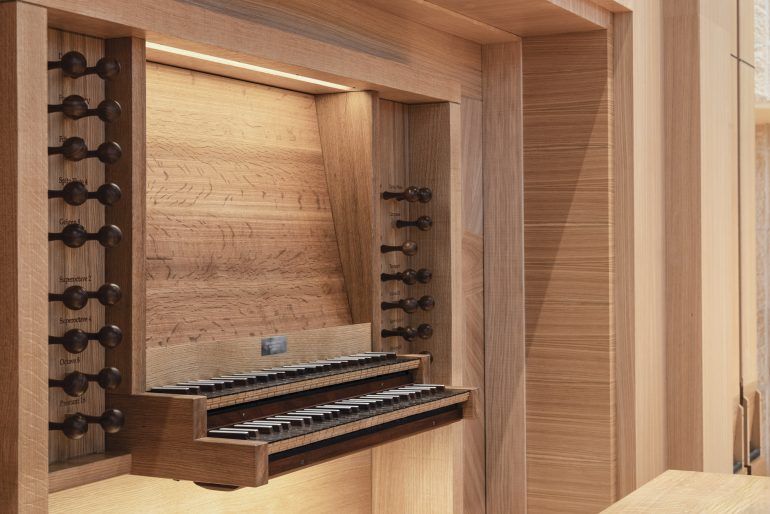
Position: Keydesk Attached
Design: Traditional Without Cover
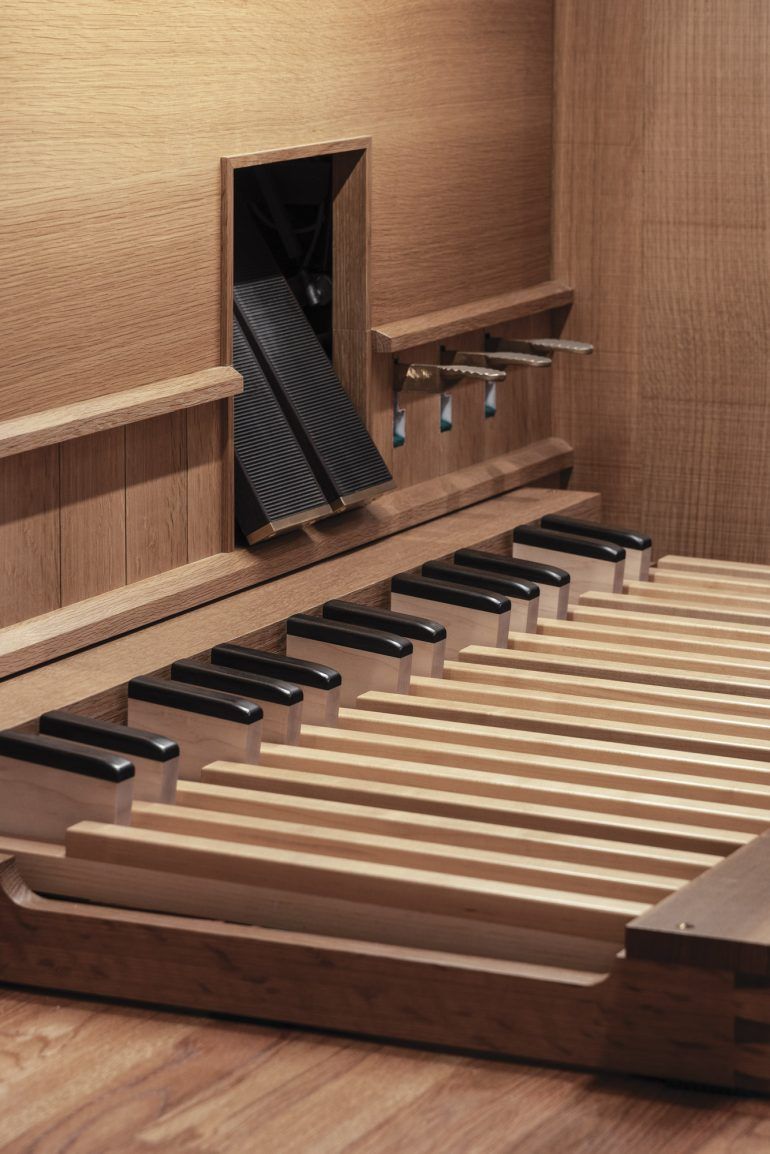
Pedalboard Type: Concave Radiating (Not Meeting AGO Standards)
Features:
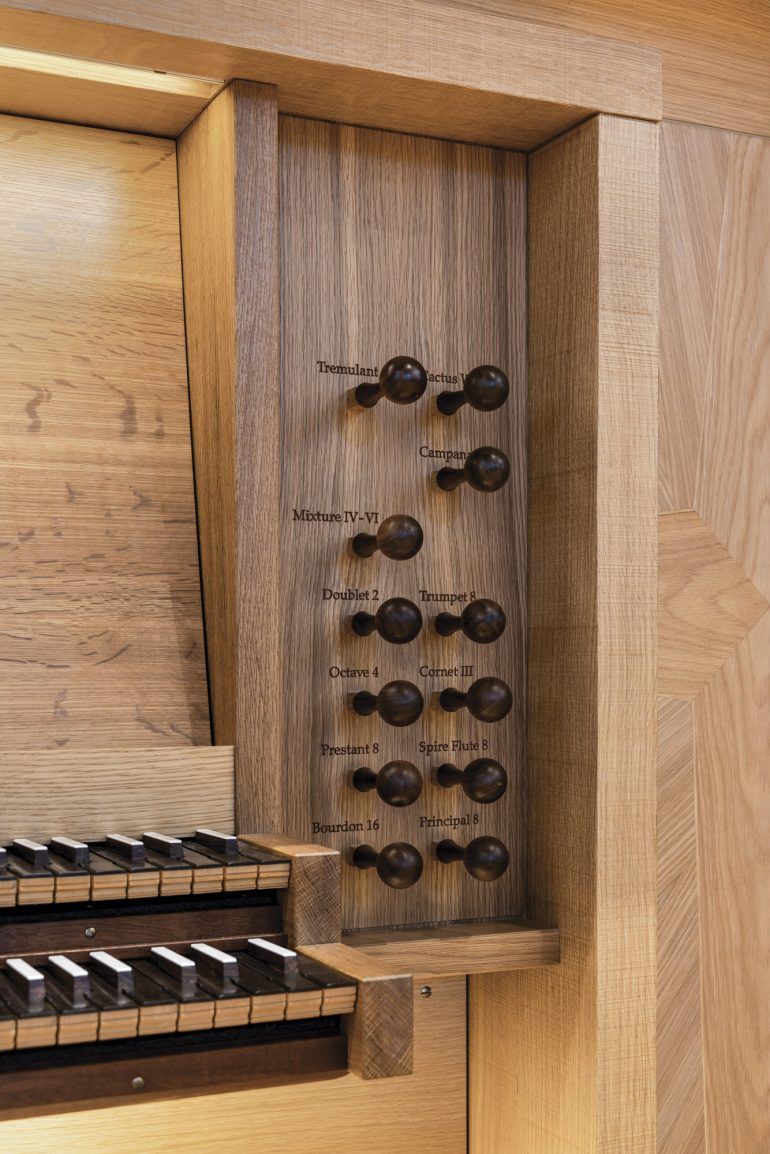
2 Manuals (56 Notes)30 Note Pedal3 Divisions27 StopsMechanical (Suspended Tracker) Key ActionMechanical Stop ActionCoupler Trundle(s)Stop Layout: Drawknobs in Vertical Rows on Flat Jambs
Expression Type: Balanced Expression Shoes/Pedals (Details Unknown)
Combination Action: Unknown
Control System: Unknown or N/A
Something missing or not quite correct?Add ConsoleorSuggest an Edit
DETAILS
This instrument is: Extant and Playable in this location
From Fisk website:
Opus 67 was originally installed in Central Christian Church, Huntington, Indiana, in 1976. Commissioned to serve as the sanctuary centerpiece of a brand-new church building, it was one of the first organs Charles Fisk designed and voiced after his 1974 research trip to East Germany; during this expedition behind the Iron Curtain, Charles’s organ-building vision expanded irrevocably thanks to the sounds of the Gottfried Silbermann instruments he heard and documented.
In 2020 we were contacted by the Huntington church leadership; they wanted the organ removed. It had stood silent for years and was neither needed nor wanted. In 2022 an enthusiastic buyer was found, and the improbable story of Opus 67’s resurrection began. The parishioners of Camelback Bible Church in Paradise Valley, Arizona, had for several years been searching for a pipe organ to grace their splendid worship space and to provide an anchor for their vibrant music program. They purchased the organ, and it was dismantled and brought to the Fisk workshop.
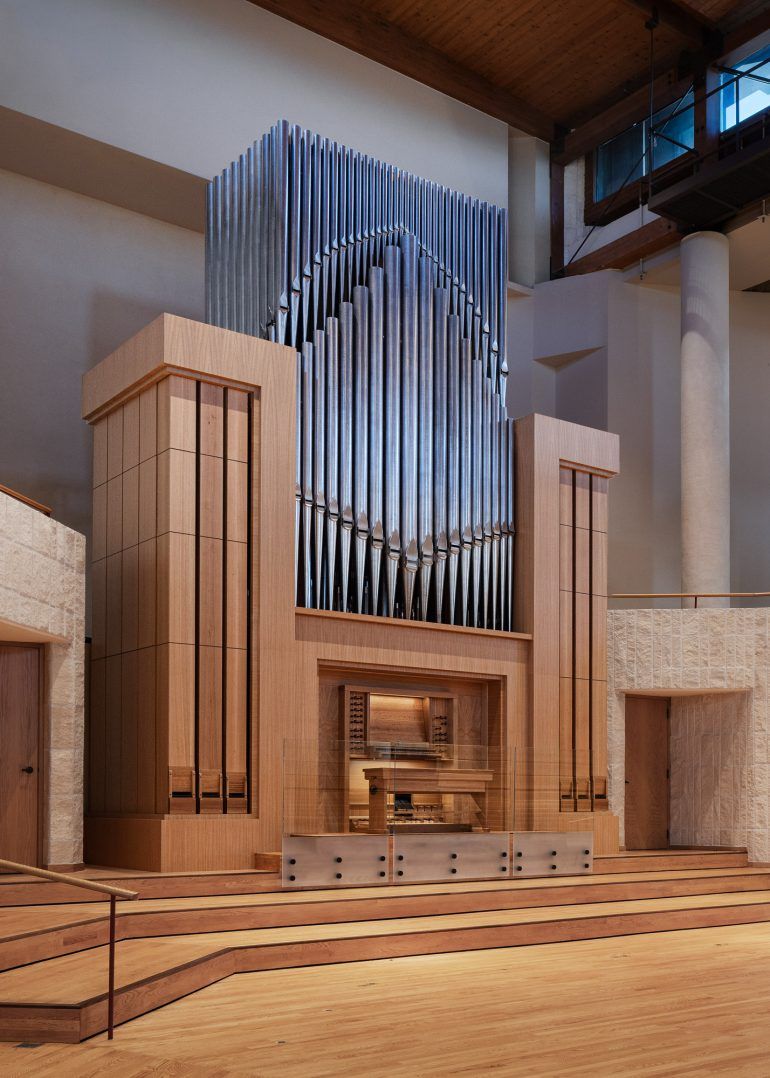
There it underwent a transformation. A new case, fitting to Camelback Church’s architecture, was designed in collaboration with church member C.P. Drewett, President and Founding Architect of Drewett Works, a Scottsdale, AZ, architecture firm. Working closely with Fisk personnel and acoustician Dana Kirkegaard, Drewett devised a unique and fresh case design that expertly fuses the traditional with the modern, honors the organ’s interior layout, and at the same time appropriately complements the sanctuary architecture.
With regard to its sound, Opus 67 has breathed a huge sigh of relief in its new acoustically resplendent home. Some noteworthy changes were made to the stoplist, including the addition of two full-length 16′ voices to the Pedal – the Prestant and the Trombone. These new 16′ stops add a welcome gravitas to the organ’s sonority. The six largest Prestant pipes are made of solid quarter-sawn oak, and, fronting the Pedal towers, offer a commanding visual impression. In addition, a second 8′ open, built of hammered lead, was added to the Great. The Swell, with its new full-height enclosure and independent rear shades, gave up its feisty Cremona 8′ but gained a milder Dulcian 16′. It is also now home to a Voce Umana 8′, giving the instrument a much-appreciated undulant. Except for the former half-length Pedal Bassoon 16′ (which the Trombone replaced) and the Swell Cremona, all original Huntington pipework remains.
Likewise, the Great and Swell windchests, along with their rollerboards, were retained. Due to the extensive modifications to the Pedal division, new chests and rollerboards were constructed. The console, formerly detached, is now attached to the lower case. The Huntington keyboards, showing very little wear, were kept. All trackers, initially made of 2mm aluminum wire, were replaced with carbon fiber. The stop action remains mechanical but has been rebuilt in its entirety.
Webpage Links: Builder's page
Related Instrument Entries: C. B. Fisk, Inc. (Opus 67, 1976)
Something missing or not quite correct?Add NoteorAdd WebpageorAdd Cross ReferenceorSuggest an Edit