W. W. Kimball Co.
Opus 7119, 1933
Worcester Memorial Auditorium
Main & Highland (Lincoln Square)
Worcester, MA, US
107 Ranks - 6,841 Pipes
Instrument ID: 7090 ● Builder ID: 6456 ● Location ID: 6717
⬆️ These are database IDs that may change. Don't use as academic reference.EXPLORE IMAGESVIEW STOPLISTSomething not quite correct?Suggest an Edit
Plenum Organ Company
🤝 Instrument entries in Massachusetts sponsored by:
We are grateful for the generous support of our sponsors, who make it possible for us to continue our mission of preserving and promoting the rich history of pipe organs across the globe.

IMAGES
Category:
Only show images in a specific category ☝️
Something missing or not quite correct?Add ImageorSuggest an Edit
STOPLISTS
Selected Item:
View additional stoplist entries if they exist ☝️
Something missing or not quite correct?Add StoplistorSuggest an Edit
CONSOLES
Selected Item:
View additional console entries if they exist ☝️
Builder: W. W. Kimball Co.
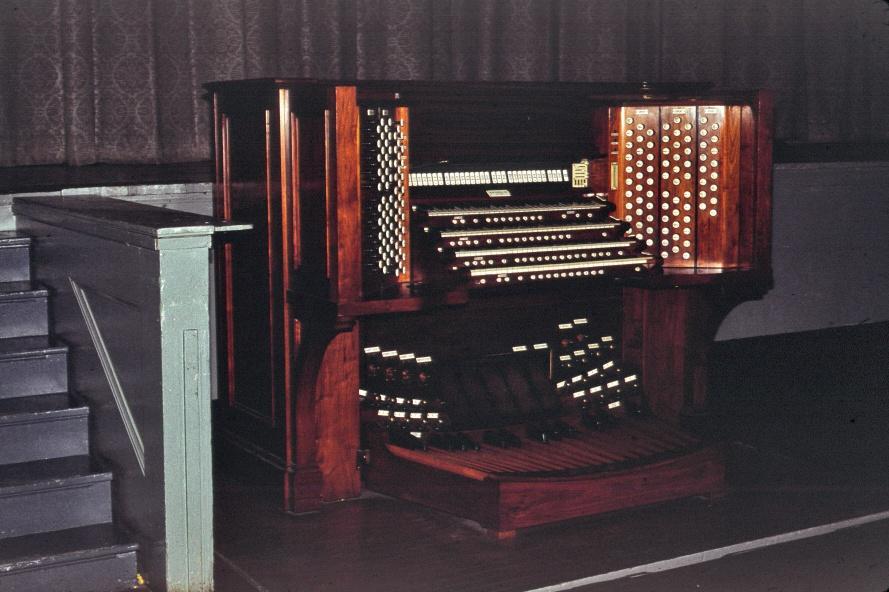
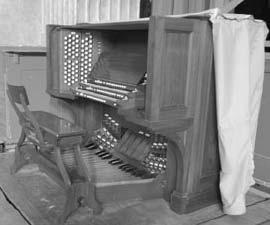
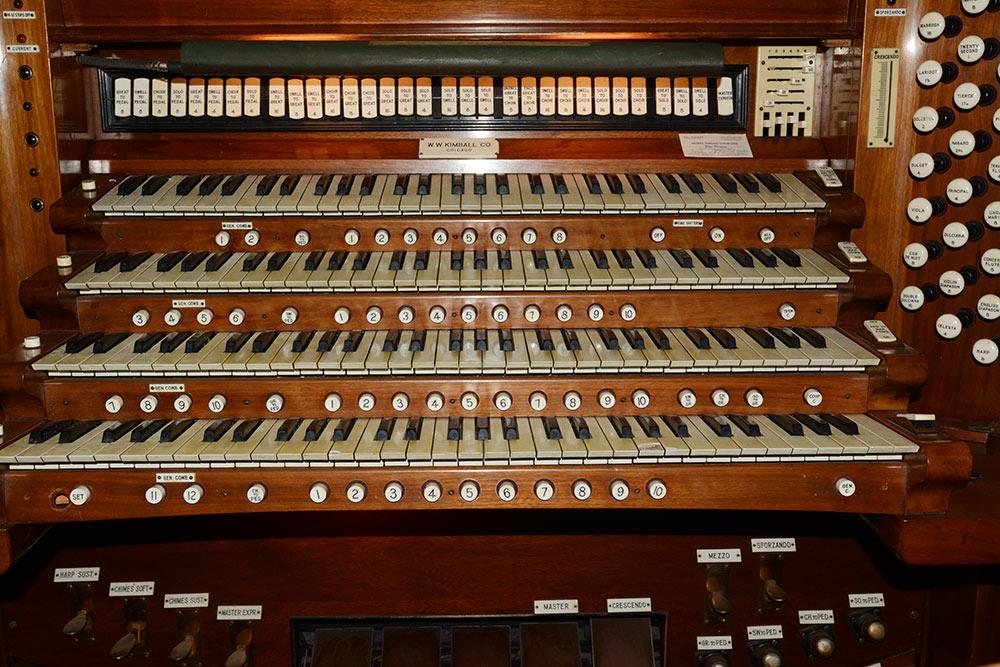
Position: Console on Lift
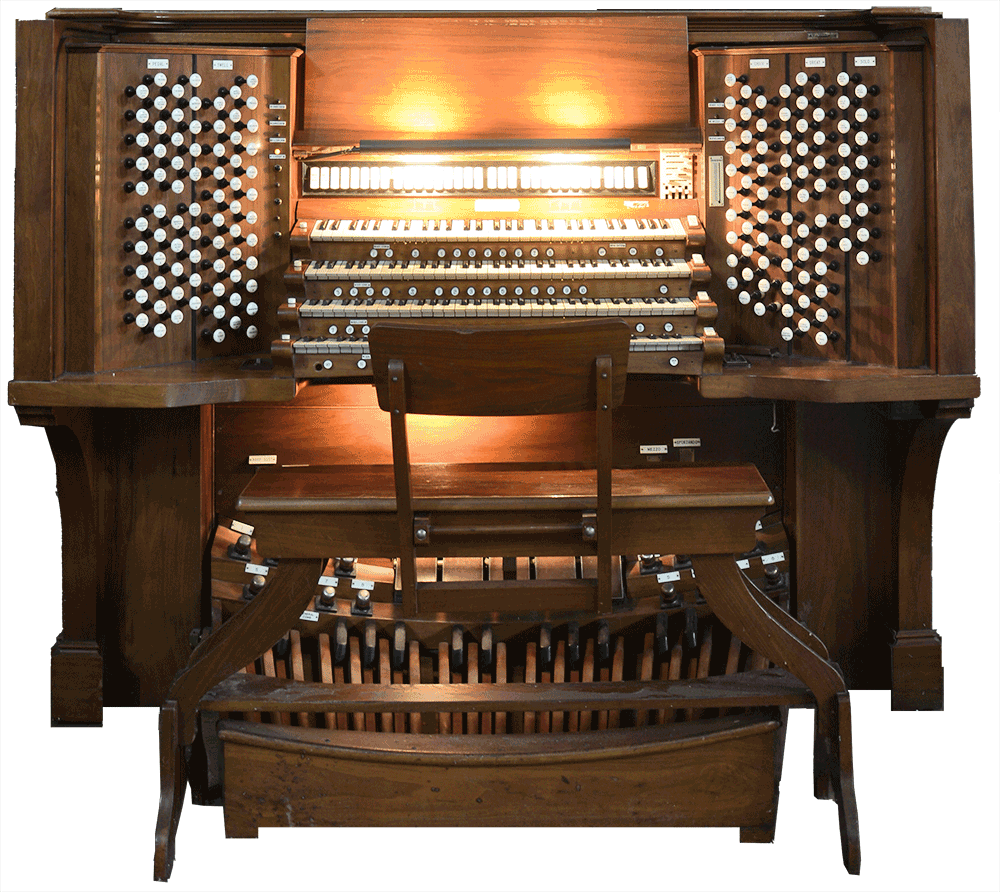
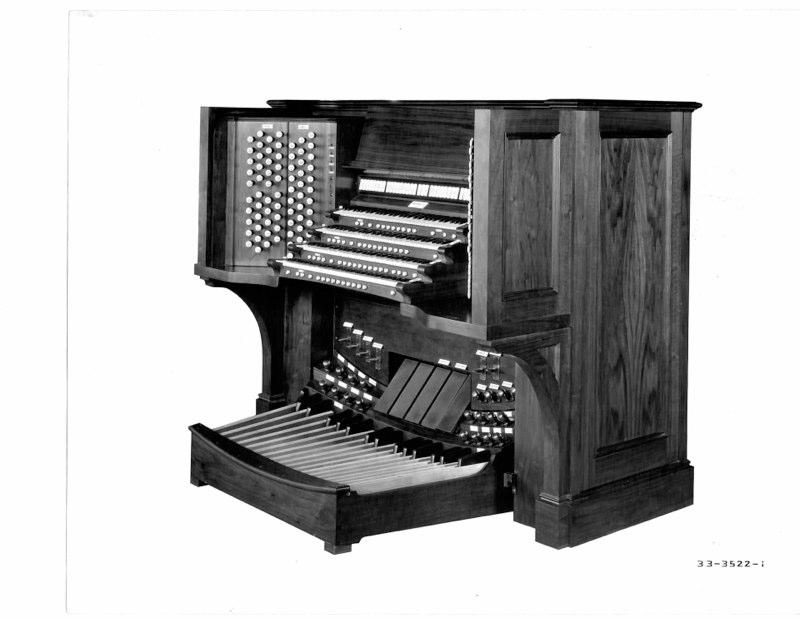
Design: Traditional With Roll Top
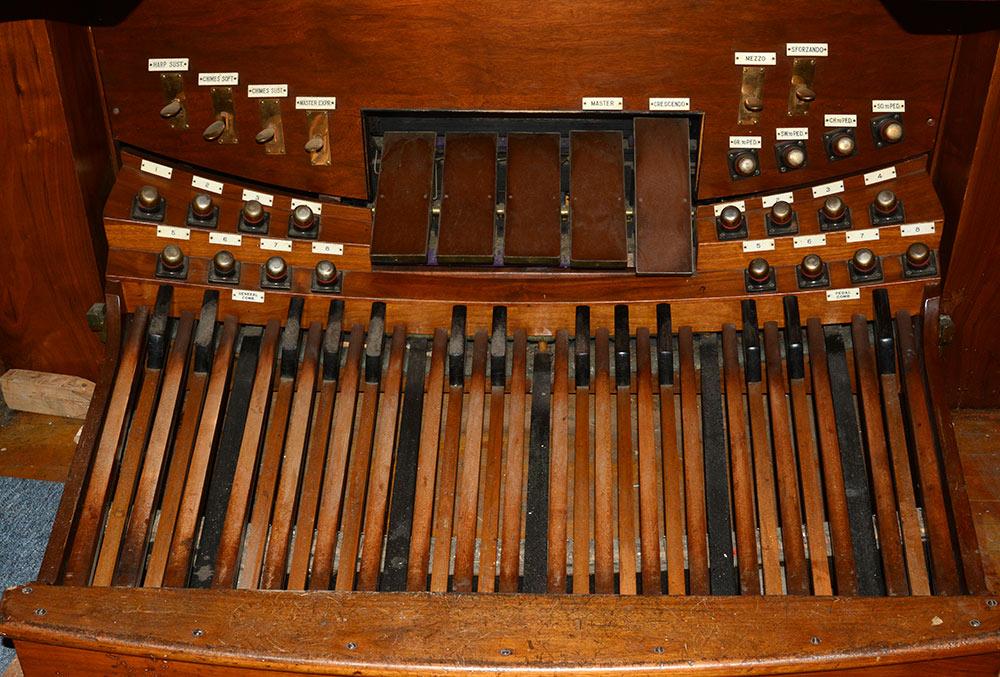
Pedalboard Type: Concave Radiating (Meeting AGO Standards)
Features:
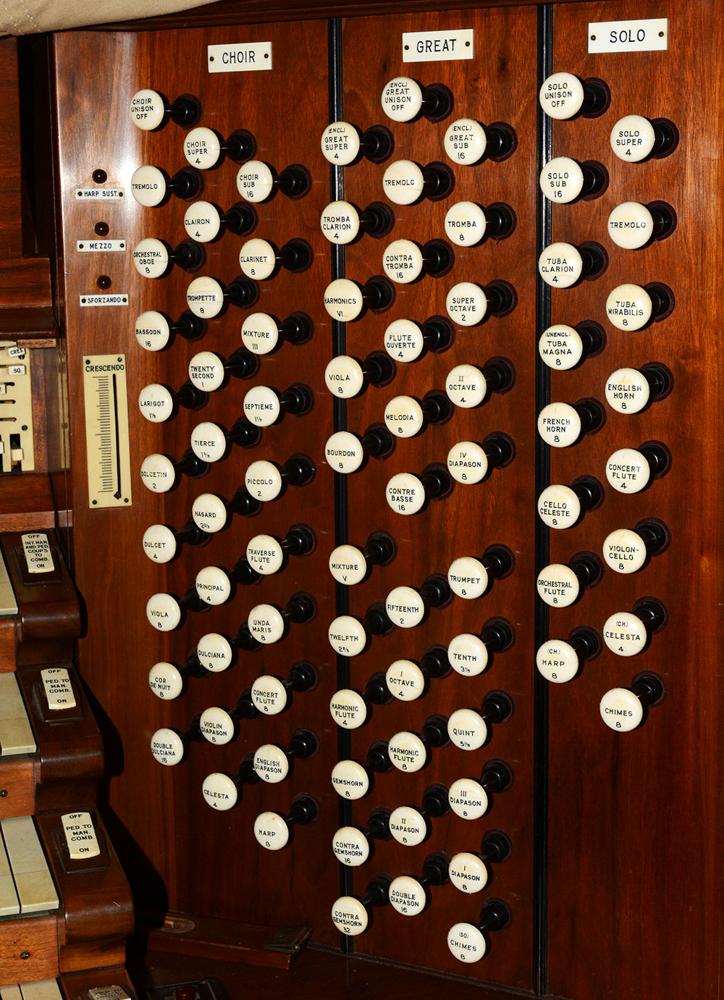
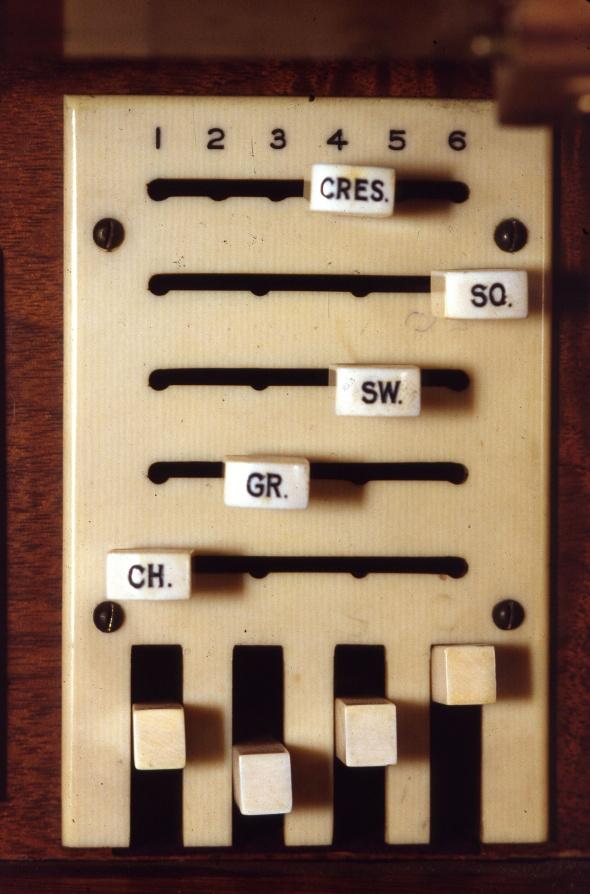
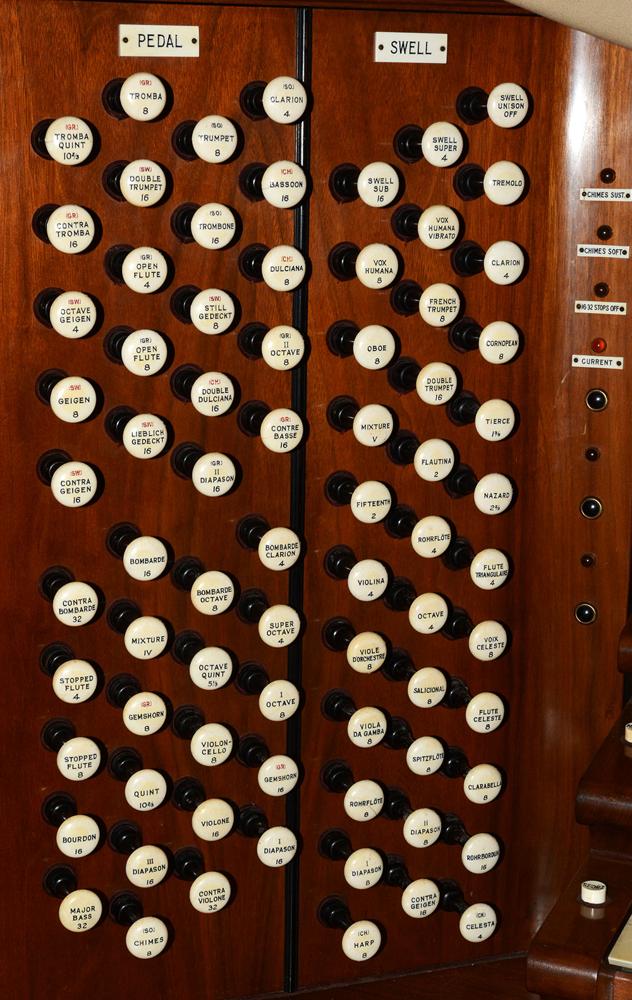
4 Manuals (61 Notes)32 Note Pedal5 Divisions88 Stops127 RegistersElectrical Key ActionElectrical Stop Action✓ Crescendo✓ Combination Thumb Piston(s)✓ Combination Toe Piston(s)✓ Sforzando Thumb Piston(s)✓ Sforzando Toe Piston(s)Stop Layout: Drawknobs in Vertical Rows on Angled Jambs
Expression Type: Balanced Expression Shoes/Pedals (Meeting AGO Standards)
Combination Action: Adjustable Combination Pistons
Control System: Unknown or N/A
Something missing or not quite correct?Add ConsoleorSuggest an Edit
DETAILS
Switch between notes, documents, and blowers ☝️
Exhibited in the 1983 OHS convention(s)
This instrument is: Extant and Playable in this location
John Roper on October 13th, 2023:
I visited the instrument on 10/12/23. The instrument is still operational but in poor musical condition. The pipework, regulators, and console are all in good physical condition, except for dirt and degraded leather. Turning on the instrument results in a flurry of wind leaks but no ciphers, and the console has tutti stuck on meaning one can only play loudly. The miraculous thing is that the instrument is still in tune (reeds included) despite not having been played or tuned since 2016. The blower is a 80hp Spencer in the basement, which had its generator (still present) replaced by an Orgelectra probably in the 1980s. The chambers are very poorly lit, but other than being dusty, there is no further evidence of water damage or destruction from people since 2016.
I visited the instrument on 10/12/23. The instrument is still operational but in poor musical condition. The pipework, regulators, and console are all in good physical condition, except for dirt and degraded leather. Turning on the instrument results in a flurry of wind leaks but no ciphers, and the console has tutti stuck on meaning one can only play loudly. The miraculous thing is that the instrument is still in tune (reeds included) despite not having been played or tuned since 2016. The blower is a 80hp Spencer in the basement, which had its generator (still present) replaced by an Orgelectra probably in the 1980s. The chambers are very poorly lit, but other than being dusty, there is no further evidence of water damage or destruction from people since 2016.
John Roper on February 24th, 2021:
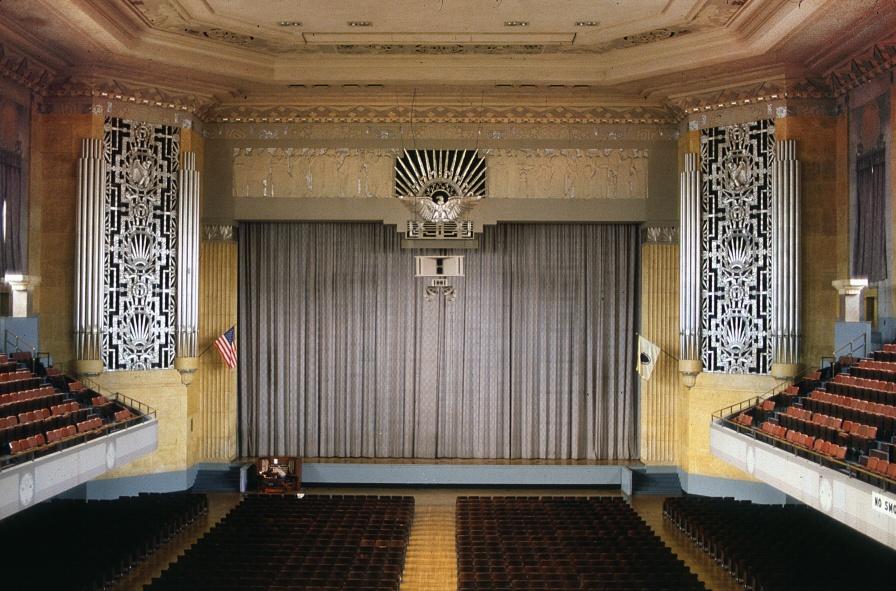
From the Worcester AUD website: Tonally Untouched, console covered. Main hall areas (first floor) cleaned June 2016. Organ is "playable" and wind leaks and ciphers significantly repaired as of June 2016 (including unenclosed great main reservoir (3'x6') releathering). Roof leaks have split several chests (enclosed great; enclosed solo chambers are on the top levels); the city repaired the roof in the 1990s. Facing the stage, the enclosed Great is on top left, unenclosed Great middle left, Pedal bottom left; Solo is top right, Swell is middle right, Choir is bottom right. The magnificent AUD organ was designed by Walter Howe, official organist, assistant director, and manager of the Worcester Music Festival; head of music at Abbot Academy, Andover; organist at First Baptist Church, Arlington, Mass.; and choral director at Chautauqua, New York; he was assisted in the planning process by R. P. Elliot, the New York representative of the Kimball Company; Hamilton B. Wood, president of the Worcester Festival Association; and Aldus C. Higgins, a member of the organ committee, who had a large concert organ in his home (Aeolian Op. 1686, 1928, 3-30, later moved to St. Joseph’s Abbey, Spencer). The drawknob 4-manual console is set on its own elevator, independent of the elevating orchestra pit. There is a “filler” cage/platform which currently sits on the stage (holding up the many-ton stage firewall “curtain”) which was used to “cover” the organ console such that when the console elevator was lowered to the appropriate height, the upper surface of this cage provided a continuous floor to match the orchestra pit elevator floor level, for when the organ was not in use. Additionally there is a wooden stair and gang plank of sorts in the basement where the organist would (almost) crawl onto the organ bench when awaiting ascension by the elevator to be lifted up for an eager audience. This mini-stair and platform is adjacent to a wiring and wind hose supply catch basin “reservoir” of sorts to manage the console’s tethered range of motion. Organ chamber wind pressures range from 5 inches through 6, 7 to 8, 10, 12, 15 to 17 or 20 inches [of water].
Database Manager on May 3rd, 2018:
Organ dedicated on November 6, 1933, with a recital by Palmer Christian.
Something missing or not quite correct?Add NoteorAdd WebpageorAdd Cross ReferenceorSuggest an Edit
Pipe Organ Database
A project of the Organ Historical Society Website by John RoperEditor Login